The AI Knowledge Gap: Why Real Stories Matter More Than Headlines
The media covers AI like a binary: either it's going to save the world or end it. Neither story is helping the people actually trying to figure out what to do on Monday morning.
Timothy Henize
Founder, The AI Handyman

For 18 years in hospital emergency departments, my team operated by a principle I've never been able to shake: identify the challenge, build the best solution you can, collect feedback, and stay humble enough to know you might need to rework the whole thing next year. In healthcare, that's not failure. It's how you keep people safe in a world that never stops changing.
AI is moving even faster. The challenges arrive daily. The solutions we build today may look completely different in six months. And that's exactly why the way we talk about AI needs to change. Both the hype cycle and the doom narratives share the same flaw: they treat AI as a finished thing to react to, not an evolving landscape to navigate together.
What the headlines get wrong
Tech media covers AI in one of two registers: euphoria or doom. Either we're on the cusp of AGI that will solve cancer and climate change, or autonomous systems are coming for every white-collar job by Q3. Both narratives are optimized for clicks, not understanding.
But there's a third problem the headlines create that almost nobody talks about: they make people feel like AI is too technical for them. Like it belongs to engineers and researchers and venture capitalists. Not a nurse manager, a small business owner, or a teacher trying to do more with less. That's simply not true. The most important skill for working with AI isn't coding. It's the same skill a good emergency department team develops over years: identifying the real problem, testing a solution honestly, and being willing to iterate.
The people actually doing this well, the marketing manager using AI to draft first-pass briefs, the small business owner who finally automated their invoicing, the developer who cut code review time in half, they're not in the headlines. Their stories are less dramatic. And they're far more useful.
The real learning happens peer-to-peer
When I started sharing my own AI experiments on LinkedIn and TikTok, something unexpected happened. People didn't respond to the technical explainers. They responded to the specific, practical stories. "I used this exact workflow and saved four hours." "I tried this tool for my use case and here's what actually happened."
That's the knowledge that travels. Not whitepapers. Not vendor case studies. Real people telling other real people what they actually tried, what worked, and what didn't.
The most valuable AI education isn't happening in boardrooms or on conference stages. It's happening in the conversations where people share what's actually true, and what actually failed.
Why global perspectives matter
The AI conversation in the US and UK is dominated by tech industry insiders. But the real story of AI adoption is happening everywhere: in Lagos, in São Paulo, in Mumbai, in Manila. People in these places are building with AI under different constraints, different opportunities, and different stakes.
A freelancer in Nigeria using AI to compete with agencies in London. A teacher in Brazil creating personalized learning materials without a tech budget. A manufacturer in India predicting equipment failures before they happen. These are the stories that expand what we think is possible, and they're mostly invisible to the Western tech media ecosystem.
Why this work feels personal
My sense of purpose has always been about service. Showing up for people who need support and helping them move forward. That's what 18 years in healthcare gave me. The arena has changed, but the purpose hasn't.
Just as I worked alongside nurses, doctors, and registration reps to serve a community of sick children and their families, I'm equally invested in helping everyone succeed as we advance into an AI-powered future. Not just the people who already have access to the best tools and training. Everyone. Locally and globally.
We have to identify obstacles, solve them, and move forward knowing full well there may be an even better way to do it tomorrow. That's not uncertainty. That's the work.
This is why we're building this
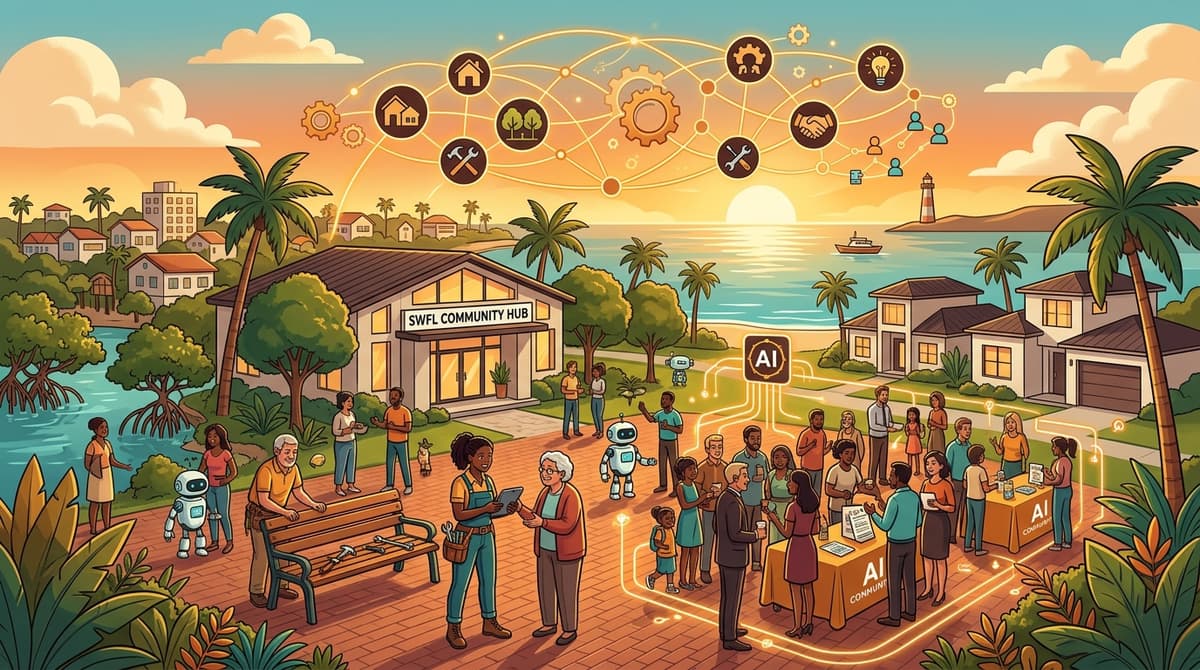
The AI Handyman community platform exists to collect and share real stories. No hype, no doom, just honest accounts from AI engineers and everyday people around the world who are figuring this out in real time. The same way a good ED team figures anything out: together, without pretending anyone has all the answers.
If you've been holding back because you thought you weren't technical enough, or experienced enough, you're exactly who this is for. Your story belongs here. The person just starting their AI journey needs to hear from you, not from a tech CEO.
Have a story like this?
Share your AI experience with the community. Real stories help real people.
Share Your Story